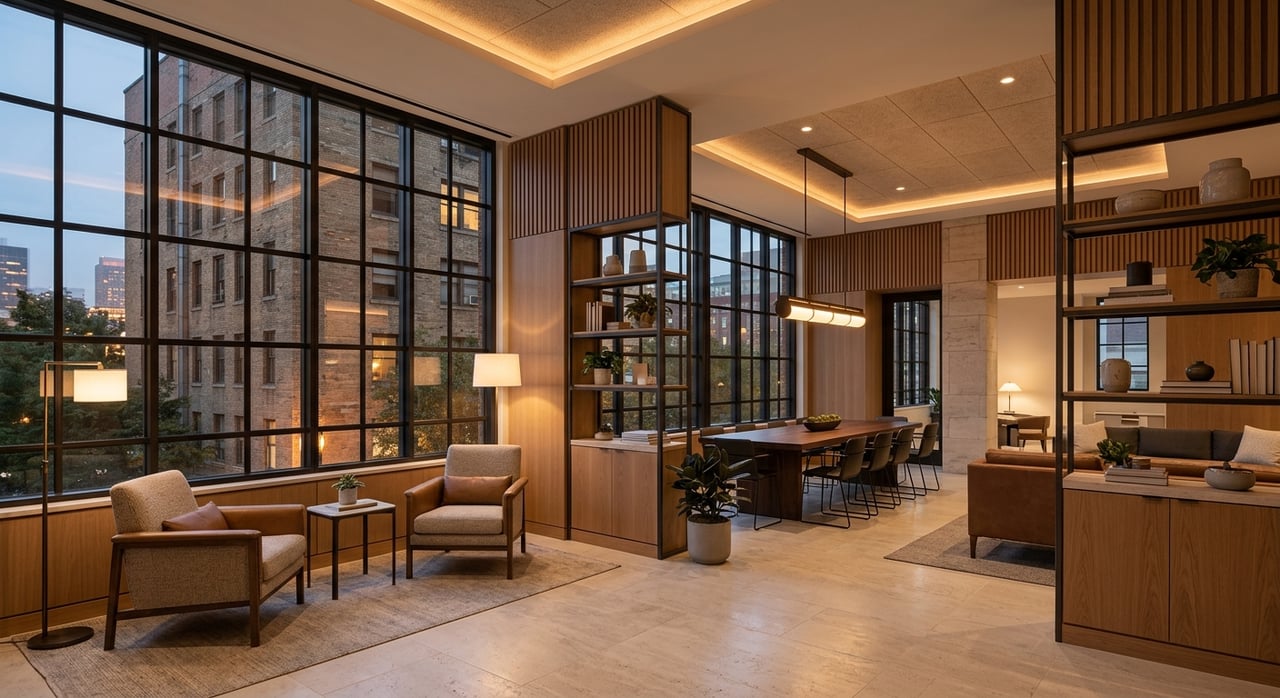
Why Williamsburg Amenity Buildings Appeal to Renters
May 21, 2026
May 21, 2026
If you have looked at rentals in Williamsburg lately, you have probably noticed one thing fast: amenity buildings are everywhere. From coworking lounges to package rooms and rooftop spaces, newer buildings are competing hard for attention in one of Brooklyn’s most active rental markets. If you are trying to understand why these features matter and what actually attracts today’s renters, this guide will help you cut through the noise. Let’s dive in.
Williamsburg is not a typical owner-heavy neighborhood. According to the NYU Furman Center, Greenpoint/Williamsburg had 191,029 residents in 2023, a homeownership rate of just 16.1%, and 24,491 new housing units added from 2010 to 2024, most of them market-rate.
That matters because renter-heavy markets tend to evolve around convenience, competition, and lifestyle fit. In Williamsburg, new buildings are not just adding apartments. They are adding a full living experience designed to stand out in a crowded field.
The local pipeline is still active. Furman reports 910 residential permits and 3,281 certificates of occupancy in new buildings in 2024, while StreetEasy says Williamsburg accounted for 1,403 new construction rental units in 2025.
When that many units come online, buildings need ways to differentiate themselves. Amenities become part of the leasing strategy, especially in larger properties trying to reach occupancy quickly and compete with other new developments nearby.
Amenities matter, but they are not the first thing most renters look at. Zillow’s 2024 renter survey found that 95% of recent renters considered staying within budget essential, and 83% said location was essential.
That same survey found 63% said broadband was essential, 60% said pet-friendliness was essential, and 38% said a home being newly built or recently renovated was essential. Common building amenities were essential for 33% of renters overall, but that rose to 45% among renters in multifamily buildings with 50 or more units.
The takeaway is simple: renters in Williamsburg are often attracted by amenities, but only when the basics already work. A building still needs the right location, a workable layout, and pricing that feels competitive for the market.
Williamsburg’s daily rhythms help explain why convenience-focused amenities perform well. The Furman Center reports an 85.4% car-free commute rate in 2024 and a mean travel time to work of 35.1 minutes.
In practical terms, that means many renters are moving through the neighborhood on foot, by subway, bike, or rideshare. Features that reduce friction, like secure package rooms, easy entry systems, bike storage, pet-friendly policies, and strong internet service, can have a real impact on day-to-day life.
For many renters, the appeal is not luxury for luxury’s sake. It is about saving time, reducing hassle, and making the home base easier to use.
One of the clearest shifts in renter preferences is the value of work-friendly shared space. Zillow’s listing analysis found coworking spaces received 16% more saves and 23% more shares per day.
That lines up with broader amenity trends. The National Apartment Association’s 2025 amenity-space study highlights communal working spaces, high-speed internet, private work pods, and flexible lounge areas as key upgrades, driven in part by remote and hybrid work.
In Williamsburg, that makes sense. If you work from home even part of the week, a building with reliable connectivity and usable shared work areas can make a smaller apartment feel much more functional.
Fitness centers remain common in new buildings, but they do not carry the same weight on their own. Zillow found that 18% of recent renters rated a shared fitness center or gym very or extremely important.
At the same time, its listing-level analysis showed fitness centers received fewer saves and shares than coworking spaces. That suggests a gym is still a useful feature, but it is no longer the headline amenity that automatically drives demand.
Modern renters tend to respond better to balanced amenity packages. A gym may help, but it works best when paired with other practical features that support daily routines.
The amenities that attract renters today often feel more practical than flashy. Based on the research, the strongest features tend to include:
In Williamsburg, these features line up with how people actually live. They support work, deliveries, movement, and social time without requiring renters to leave the building for every need.
It is also important to avoid thinking about Williamsburg renters as one single profile. Furman reports that 36.4% of households are single-person households, while 21.6% include children under 18.
StreetEasy adds another useful signal: 42% of Williamsburg’s new-construction rental inventory consists of two- or three-bedroom units. That points to demand not only from solo renters, but also from roommate households and smaller households looking for more space.
Because of that mix, amenity buildings often succeed when they offer flexible benefits. A resident lounge may appeal to a work-from-home renter, while package handling, stroller-friendly access, or larger shared outdoor areas may matter to a different household.
Williamsburg can support high rents, but price still leads the decision. StreetEasy currently shows a median base rent of $4,770 for the neighborhood, and the Furman Center ranks Greenpoint/Williamsburg among the city’s 10 most expensive rent markets.
At the same time, the market is not frictionless. Furman reports a 2.0% rental vacancy rate in 2023, and Brooklyn Community Board 1 says nearly 48% of renter households are rent-burdened.
That creates an important reality for landlords, investors, and leasing teams: even attractive amenity packages cannot overcome pricing that misses the market. In Williamsburg, amenities support the lease. They do not replace disciplined pricing.
In a supply-heavy environment, even strong buildings may need incentives. StreetEasy reported that 24.2% of Brooklyn rentals offered concessions in February 2026, while 9.8% had price cuts.
CBRE also notes that newly built properties are generally treated as pre-stabilized until they reach at least 85% occupancy. During that lease-up phase, buildings often need both a solid amenity story and competitive concessions to build momentum.
This is one reason amenity-rich towers remain attractive to renters. If a building pairs new finishes, useful shared spaces, and short-term incentives, it can become much easier for renters to justify the move.
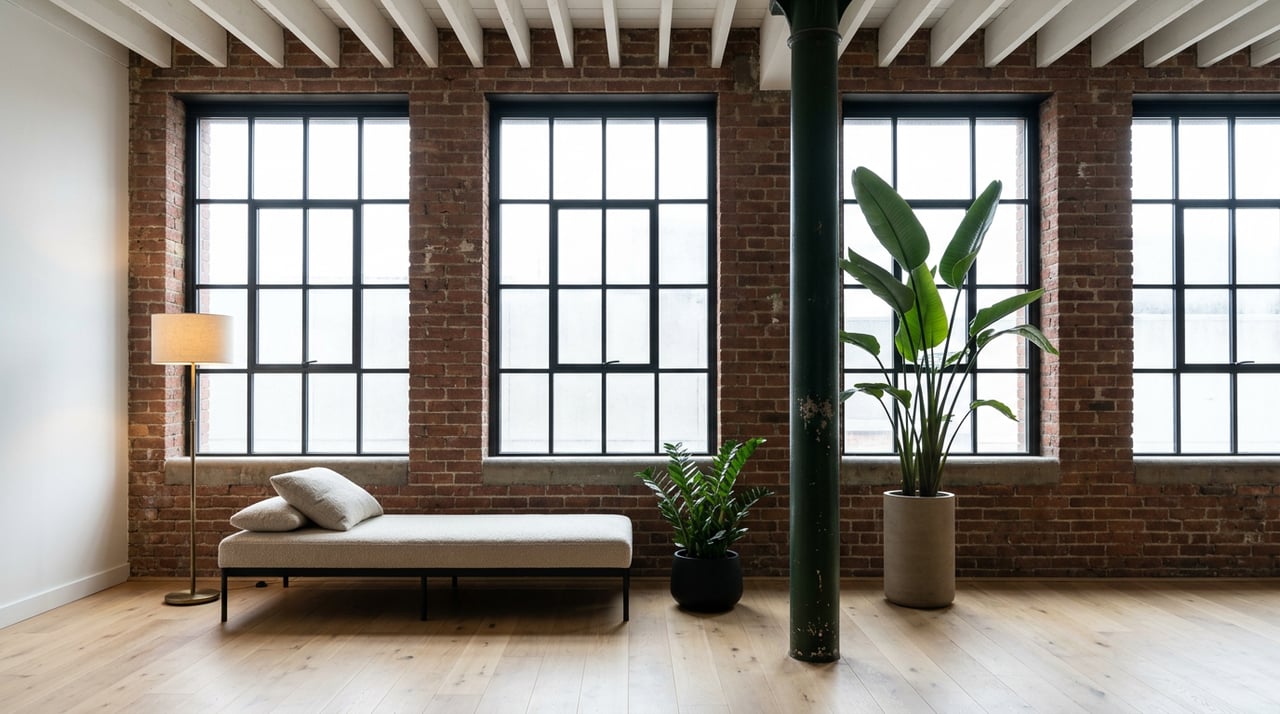
Amenity buildings are not the only viable rental product in Williamsburg. Smaller walk-ups and loft-style buildings can still compete well, but they usually win on a different set of strengths.
As the research shows, renter decision-making starts with budget, location, and layout. A well-kept walk-up near transit may remain attractive without a large amenity package if it offers strong natural light, a good floor plan, reliable internet, and practical upgrades like in-unit laundry or a clean shared entry.
By contrast, larger amenity buildings appeal to renters who want a more full-service experience. They often attract households looking for a smoother daily routine, more flexibility inside the building, and the convenience of having several needs solved in one place.
If you own, lease, or evaluate rental property in Williamsburg, the lesson is not that every building needs a luxury roof deck and a long amenity list. The better lesson is that amenities work when they match the renter profile and support the asking rent.
In this submarket, convenience-forward buildings are often well positioned because Williamsburg is dense, transit-oriented, and renter-heavy. But the strongest strategy is usually the simplest one: pair the right location and layout with amenities that solve real problems.
That can mean different things depending on the asset:
Williamsburg amenity buildings attract modern renters because they reflect how people live now. In a neighborhood shaped by car-free commuting, hybrid work, steady new supply, and high rent levels, renters tend to value features that make daily life easier, more flexible, and more efficient.
The strongest buildings are not simply the ones with the longest list of perks. They are the ones that combine location, layout, and practical amenities in a way that feels worth the rent.
If you are evaluating a rental building, planning a lease-up, or thinking through an investment in Williamsburg, local market context matters. The right strategy depends on the asset, the renter target, and the competitive set. For tailored guidance on Brooklyn and NYC rentals, investments, and positioning, connect with The Heard | Khedr Team.
Stay up to date on the latest real estate trends.
Get In Touch With Our Team To Learn More

Heema Khedr
110 Fifth Avenue, Floor 7 New York NY 10011