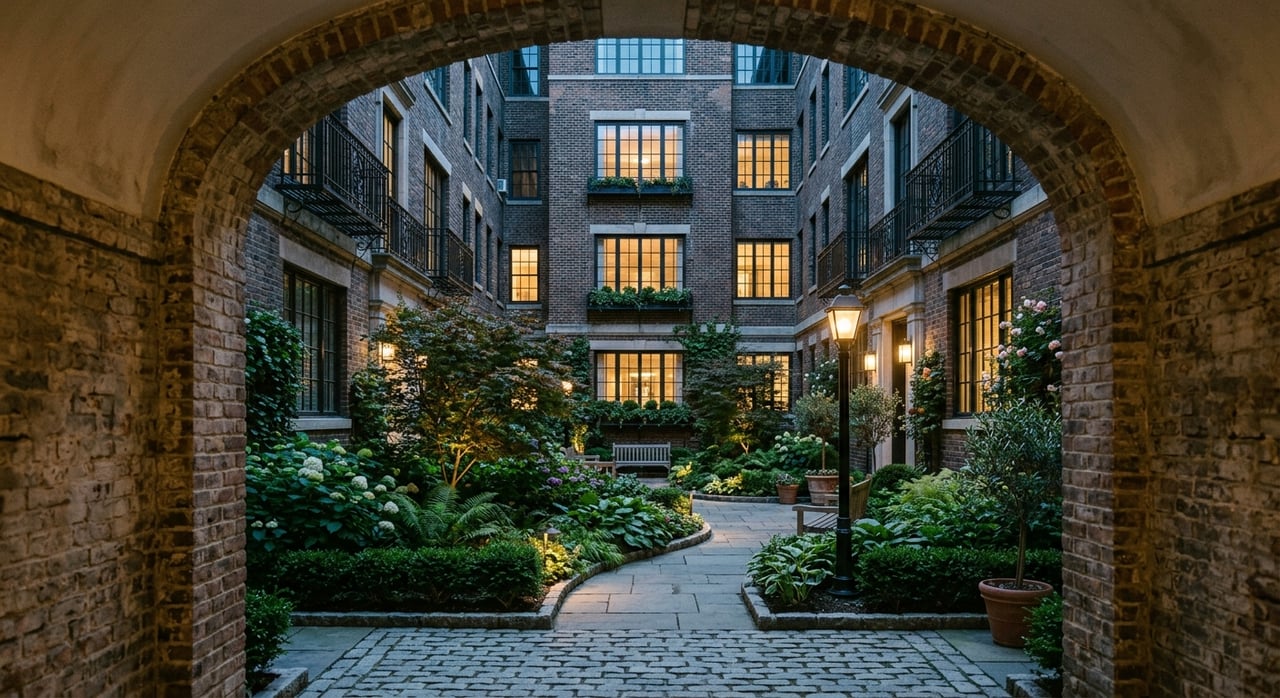
West Village Hidden Courtyards and Quiet Corners
July 9, 2026
July 9, 2026
Looking for the West Village spots that feel like you stumbled onto a secret? That is part of what makes this corner of Manhattan so memorable. Beyond the well-known brownstone blocks, you will find tucked-away courts, narrow mews, and small green spaces that reveal a quieter side of Greenwich Village. If you want to understand why the neighborhood feels so layered and lived-in, these hidden corners are a great place to start. Let’s dive in.
Much of the West Village’s charm is tied to the larger Greenwich Village Historic District. According to the New York City Landmarks Preservation Commission, the district was designated in 1969, was the largest historic district at the time, and remains the largest in New York City today, with more than 2,000 buildings across over 65 blocks.
That scale matters because it preserves not just individual buildings, but also the neighborhood’s unusual street pattern. Short streets, irregular blocks, and intimate lanes help create the feeling that something interesting may be waiting just around the corner.
You can see that in places like Grove Street, Minetta Lane, West Washington Place, and the famously puzzling stretch where Waverly Place splits and intersects itself just south of Christopher Street. Instead of reading like a rigid grid, this part of Manhattan feels discovered over time.
Grove Court is one of the clearest examples of a hidden residential court in the West Village. Tucked behind Grove Street, it sits behind a private gate and contains six small brick townhouses built from 1852 to 1854 as workingmen’s cottages on the rear yards of older houses.
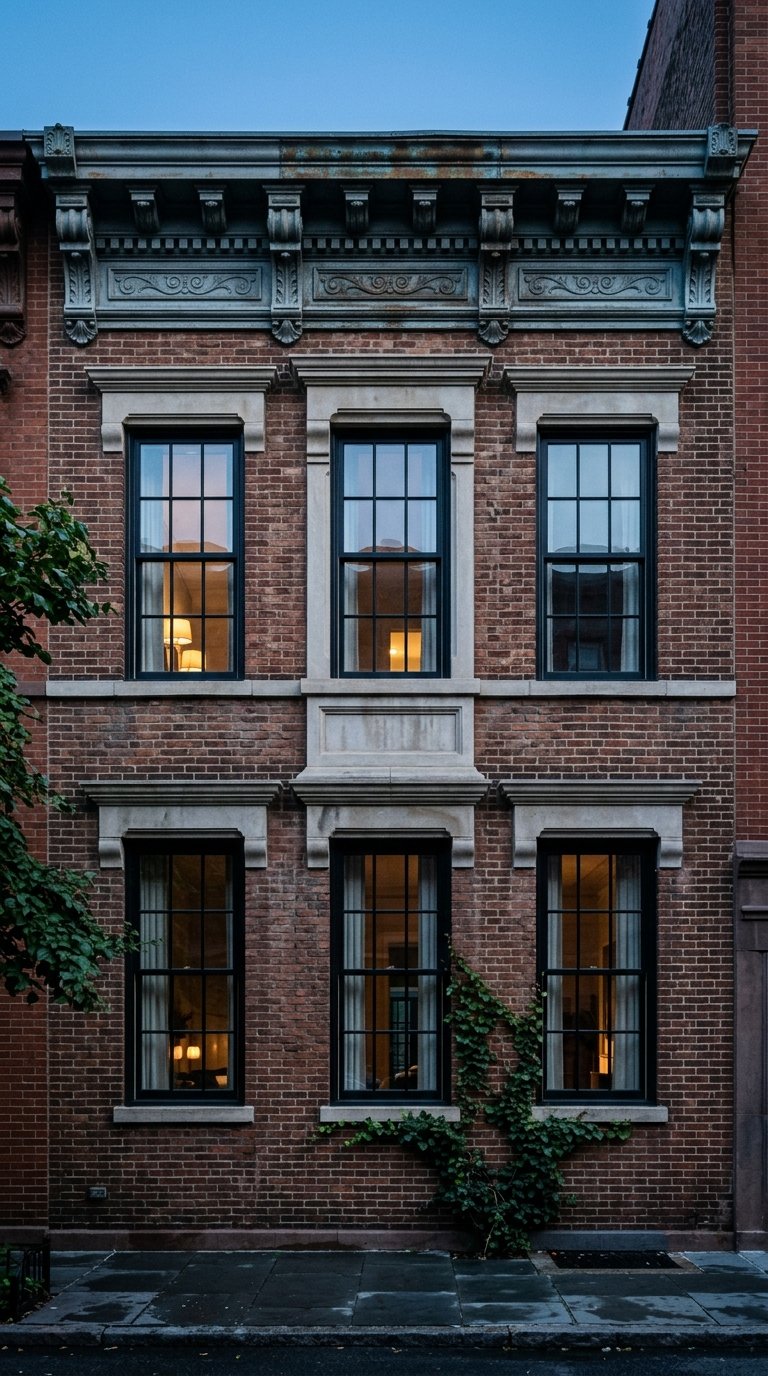
What makes Grove Court so striking is its scale. The tiny homes, brick facades, and enclosed setting feel almost like a small room hidden inside the city.
It is also one of the neighborhood’s most photographed residential enclaves, and it is easy to see why. Even viewed from the street, it captures the texture that draws so many people to the West Village: history, intimacy, and architecture that feels human in scale.
Patchin Place and Milligan Place show off another side of the Village’s hidden character. These tucked-away courts sit on the trapezoidal block bounded by Sixth Avenue, Greenwich Avenue, Tenth Street, and Eleventh Street, and both feature small mid-19th-century vernacular houses built by Aaron D. Patchin.
Patchin Place is especially known for its gas lamp, while Milligan Place stands out for its wrought-iron gate. Those details may sound small, but in the West Village, small details often create the biggest impression.
The approach matters here too. The north side of West 10th Street between Sixth Avenue and Greenwich Avenue acts almost like an introduction, with early-19th-century rowhouses that set the tone before you reach Patchin Place itself.
These are the kinds of places that remind you the neighborhood is not only about headline landmarks. It is also about subtle transitions, quiet entries, and residential blocks that reward a slower look.
If you want to picture the classic Village mews, Washington Mews is a strong example. Located one block north of Washington Square Park, it began as a row of horse stables serving nearby townhouses and still contains a mix of 19th-century stables and 20th-century residences.
Part of the street retains historic cobblestones, which adds to its old-world feel. The combination of narrow scale, preserved surfaces, and low-rise buildings makes it stand apart from the broader avenues nearby.
MacDougal Alley offers a similar sense of discovery with a slightly different history. Formally created in 1833 as a private court serving townhouses on Washington Square North and West 8th Street, the alley later became home to former stables converted into artist studios and residences.
That history of reuse is part of what gives the area so much depth. In the West Village and surrounding Village blocks, hidden corners often tell stories not just about design, but about how New Yorkers adapted spaces over time.
Not every courtyard-like space in the West Village comes from the 19th century. West Village Houses offers a later example of how low-rise, human-scaled planning became part of the neighborhood’s identity.
Spanning Bank to Morton Streets and Washington to West Streets, the development was planned with gardens, courtyards, commercial space, and a supermarket. Village Preservation notes that the completed project was designed to harmonize with the Village’s scale through low-rise walk-up buildings and red brick.
That makes West Village Houses a useful counterpoint to the older mews and private courts. It shows that the neighborhood’s appeal is not only about age, but also about the continued value of design that respects the street and the pedestrian experience.
The West Village’s hidden corners feel even more special because they sit near larger and smaller public green spaces. That contrast between enclosed streets and open air is one reason the neighborhood feels so livable.
Washington Square Park is the area’s major green anchor. The park covers 9.749 acres, and a 2014 restoration added or improved an accessible plaza, the main fountain, expanded lawns, planting beds, a playground, a stage, pétanque courts, a dog run, a chess plaza, seating, fencing, light poles, paths, and public restrooms.
For residents and visitors, it serves as a spacious counterbalance to the Village’s tighter blocks. You can move from a narrow mews or gated court to an open plaza in just a few minutes.
Christopher Park is smaller in scale but carries deep civic meaning. The National Park Service describes it as a gathering place, refuge, and platform for LGBTQ+ civil rights, and notes that it continues to host Pride marches, moments of grief, and celebrations.
That makes it more than just a pocket park. It reflects how public space in the Village can feel intimate while also holding a larger place in New York City history.
On the neighborhood’s western edge, Hudson River Park offers a very different kind of open space. The Greenwich Village section includes the West Village Apple Garden, The Apple sculpture, the Pier 45 lawn, the Pier 51 playground, and Leroy Street Dog Park.
Hudson River Park runs four miles along Manhattan’s west side and draws more than 17 million visits each year. If the interior blocks of the West Village feel enclosed and textured, the waterfront brings in light, wider paths, and long views.
James J. Walker Park is another nearby everyday amenity worth knowing. Located at Hudson, Leroy, and Clarkson Streets, it covers 1.67 acres and fits the neighborhood pattern of smaller-scale green space rather than oversized destination grounds.
For many buyers and renters, these public spaces help explain the neighborhood’s rhythm. You get both quiet corners and easy access to places where you can sit, walk, or spend time outdoors.
If you are exploring these corners in person, it helps to focus less on checking off addresses and more on reading the details around you. In the West Village, atmosphere often comes from the little things.
Look for features like:
It is also worth remembering that some of the most charming spots are private or partly private spaces. Grove Court is gated, Washington Mews is a private street, and MacDougal Alley is a private court, so the best approach is respectful street-level viewing rather than assuming open public access.
For buyers, renters, and owners, these hidden places help define what people mean when they talk about West Village character. The appeal is not just about square footage or finishes. It is also about block texture, scale, and how the neighborhood feels when you move through it.
That can shape how you think about value from one micro-location to the next. A home near a quiet mews, a pocket park, or a distinctive historic block may offer a different daily experience than a home only a few streets away.
If you are considering a purchase, sale, or rental in the Village, understanding these nuances matters. In a Manhattan market where location can change feel block by block, hyper-local knowledge helps you make better decisions with more confidence.
If you want guidance grounded in neighborhood detail and a high-touch approach to Manhattan real estate, connect with The Heard | Khedr Team.
Stay up to date on the latest real estate trends.
Get In Touch With Our Team To Learn More
Heema Khedr
110 Fifth Avenue, Floor 7 New York NY 10011